Understanding Tax Regulations for Private Foundations: A Comprehensive Guide

The Foundation of Foundation Taxation: Core Requirements
Private foundations operate under a unique set of tax regulations designed to ensure transparency, accountability, and proper use of charitable assets. Unlike public charities, private foundations face stricter oversight and specific excise tax obligations that require careful attention and planning throughout the fiscal year.
The Internal Revenue Service classifies private foundations as tax-exempt organizations under Section 501(c)(3) of the Internal Revenue Code, but this status comes with significant responsibilities. Foundation trustees must understand that maintaining tax-exempt status is not a one-time achievement but an ongoing commitment to compliance with federal tax law.
At the heart of foundation taxation lies the annual Form 990-PF, the Return of Private Foundation. This comprehensive document serves multiple purposes: it reports the foundation's financial activities, demonstrates compliance with distribution requirements, and provides public transparency about the foundation's operations. Recent updates to Form 990-PF have expanded reporting requirements, particularly in areas related to grant-making activities and investment holdings.
Critical Compliance Deadline
Form 990-PF must be filed by the 15th day of the fifth month after the close of your foundation's tax year. For calendar-year foundations, this means a May 15 deadline. Extensions are available but must be requested before the original due date.
Excise Tax Obligations: Understanding the Two-Tier System
One of the most distinctive features of private foundation taxation is the excise tax on net investment income. This tax serves as the foundation's primary contribution to federal revenue and helps offset the administrative costs of IRS oversight of the foundation sector.
The Standard Rate and Reduced Rate Structure
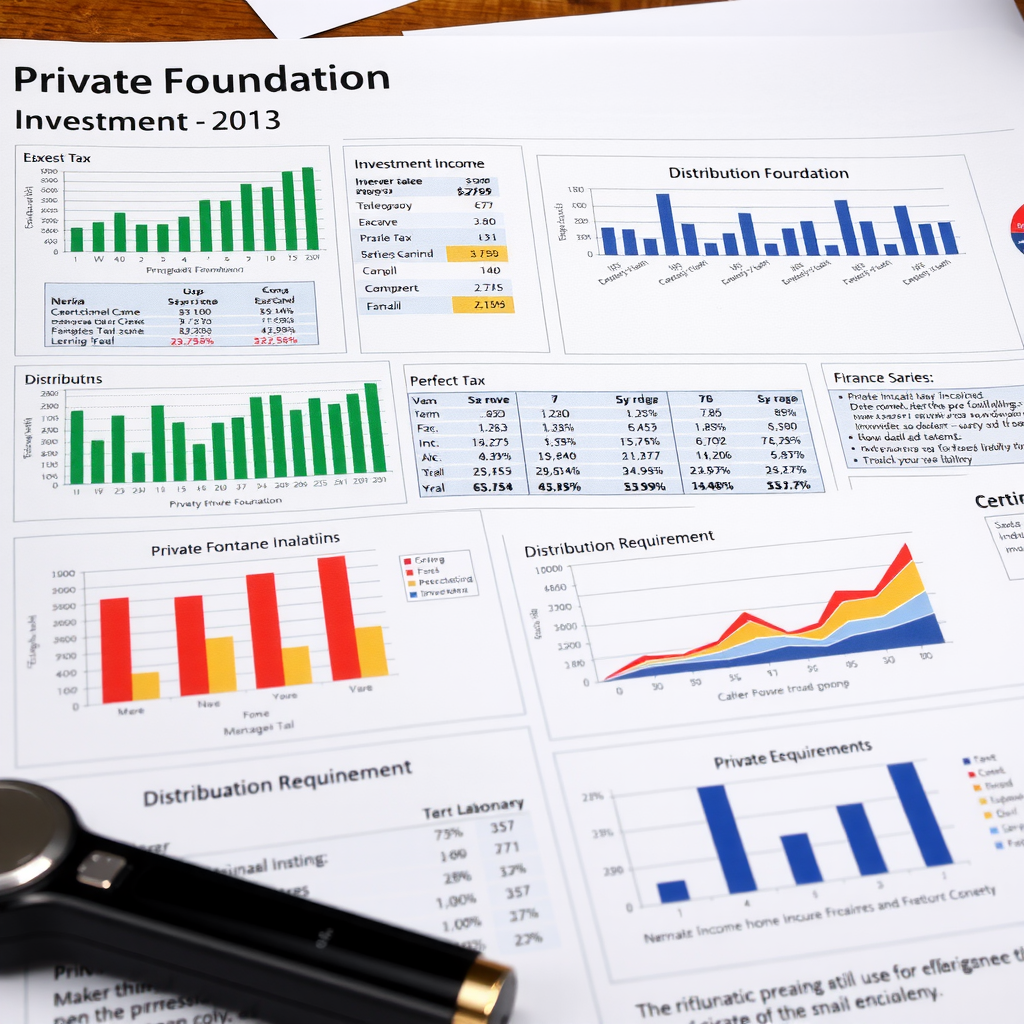
Private foundations typically pay an excise tax of 1.39% on net investment income, which includes interest, dividends, capital gains, and other investment returns. However, foundations that meet specific distribution requirements may qualify for a reduced rate. Understanding this two-tier system is essential for effective tax planning.
Net investment income is calculated by taking gross investment income and subtracting directly connected expenses. This includes investment advisory fees, custodial fees, and other costs directly attributable to producing investment income. Proper allocation of expenses between investment activities and charitable operations can significantly impact your excise tax liability.
The reduced excise tax rate of 1.0% is available to foundations that meet a qualifying distribution test based on their average payout over the previous five years. This incentive encourages consistent and generous grant-making, rewarding foundations that maintain strong distribution patterns. Financial officers should carefully track historical distributions to determine eligibility for this beneficial rate.
Key Factors in Excise Tax Calculation
- Include all forms of investment income: interest, dividends, rents, royalties, and capital gains
- Properly allocate expenses between investment and charitable activities
- Track five-year distribution history to qualify for reduced rate
- Consider timing of asset sales to manage tax liability
- Maintain detailed records of all investment-related transactions
Minimum Distribution Requirements: The Five Percent Rule
Perhaps the most significant ongoing obligation for private foundations is the mandatory minimum distribution requirement. Foundations must annually distribute approximately five percent of the fair market value of their non-charitable-use assets for charitable purposes. This requirement ensures that foundation assets actively serve charitable purposes rather than accumulating indefinitely.
The calculation of minimum distribution requirements involves several steps and considerations. First, determine the fair market value of all foundation assets, excluding those used directly in carrying out the foundation's exempt purposes, such as office buildings or program-related equipment. This valuation typically occurs on the first day of the tax year, though monthly averaging is permitted and often advantageous.

What Counts Toward Distribution Requirements
Qualifying distributions include grants to public charities and individuals, reasonable administrative expenses necessary to make grants, and amounts paid to acquire assets used directly in carrying out exempt purposes. Understanding what qualifies is crucial for meeting your distribution obligations while maximizing charitable impact.
Direct charitable activities conducted by the foundation also count toward distribution requirements. If your foundation operates its own programs rather than solely making grants, the expenses associated with these programs generally qualify as distributions. This includes salaries of program staff, program supplies, and other direct costs of charitable activities.
Administrative expenses qualify as distributions only to the extent they are reasonable and necessary for making grants or conducting direct charitable activities. The IRS scrutinizes excessive administrative costs, so foundations must maintain appropriate ratios between program expenses and overhead. Generally, compensation must be reasonable, and expenses must be properly documented and directly related to charitable purposes.
"The five percent distribution requirement represents a fundamental bargain: in exchange for tax-exempt status and the ability to accumulate wealth, foundations commit to actively deploying resources for charitable purposes each year."
Self-Dealing Prohibitions: Protecting Foundation Assets
Self-dealing rules represent some of the strictest prohibitions in foundation law, designed to prevent private foundations from serving the personal interests of insiders rather than charitable purposes. These rules apply to transactions between the foundation and disqualified persons, a category that includes substantial contributors, foundation managers, and their family members.
The definition of self-dealing is intentionally broad and includes virtually any financial transaction between the foundation and a disqualified person. This encompasses sales or exchanges of property, loans, payment of compensation, transfer of foundation income or assets, and use of foundation assets for personal benefit. Even transactions at fair market value may constitute prohibited self-dealing.
Common Self-Dealing Scenarios to Avoid
Foundation trustees must be vigilant about potential self-dealing situations. Paying excessive compensation to a foundation manager constitutes self-dealing, even if the manager provides valuable services. Renting office space from a disqualified person, regardless of market rates, typically violates self-dealing rules. Using foundation assets, such as vehicles or vacation properties, for personal purposes always constitutes prohibited self-dealing.

The consequences of self-dealing are severe and apply to both the disqualified person and foundation managers who knowingly participate in the transaction. Initial taxes of 10% of the amount involved apply to the disqualified person, with additional taxes of 5% on foundation managers. If the self-dealing is not corrected, additional taxes of 200% and 50% respectively may apply. These penalties underscore the importance of careful review of all foundation transactions.
Exceptions to Self-Dealing Rules
Limited exceptions exist for certain transactions, including payment of reasonable compensation for personal services necessary to carry out exempt purposes, reimbursement of reasonable expenses incurred in connection with foundation business, and certain transactions with government officials. However, these exceptions are narrowly construed and require careful documentation.
Excess Business Holdings: Limiting Private Control
Private foundations face restrictions on ownership of business enterprises to prevent foundations from being used as vehicles for maintaining family control of businesses while enjoying tax benefits. The excess business holdings rules limit foundation ownership in any business enterprise to 20% of voting stock, with certain adjustments based on ownership by disqualified persons.
The basic rule provides that a foundation and all disqualified persons together cannot own more than 20% of the voting stock of a corporation or 20% of the profits interest in a partnership or other business enterprise. If disqualified persons own no interest in the business, the foundation may own up to 35%. These limits apply separately to each business enterprise.
Calculating Permitted Holdings
Determining permitted holdings requires careful analysis of both direct and indirect ownership. Attribution rules may cause the foundation to be treated as owning stock held by disqualified persons or related entities. Foundations must regularly review their holdings to ensure compliance, particularly when ownership structures change or new investments are made.
Certain holdings receive special treatment under the excess business holdings rules. Functionally related businesses, which substantially further the foundation's exempt purposes and are not conducted primarily for profit, are excluded from the calculation. Additionally, holdings in businesses with passive income only, such as rental income from real estate, may receive more favorable treatment.
Foundations that exceed permitted holdings face a 10% excise tax on the excess holdings, with an additional 200% tax if the excess is not corrected within a specified correction period. Given these substantial penalties, foundations should implement systems to monitor business holdings continuously and take corrective action promptly if limits are exceeded.
Jeopardizing Investments: Prudent Investment Standards
Private foundations must manage their investments prudently, avoiding investments that jeopardize the carrying out of exempt purposes. This requirement goes beyond general fiduciary standards, imposing specific tax penalties on investments that show a lack of reasonable business care and prudence in providing for the foundation's charitable needs.

The determination of whether an investment jeopardizes exempt purposes is made on an investment-by-investment basis at the time the investment is made. Factors considered include the foundation's overall investment portfolio, the expected return, the risk of loss, and the need for diversification. Speculative investments, such as trading on margin, commodity futures, or working interests in oil and gas wells, receive particular scrutiny.
Developing a Prudent Investment Policy
Foundation trustees should adopt a comprehensive investment policy that addresses risk tolerance, diversification requirements, and prohibited investment types. This policy should be reviewed regularly and updated to reflect changes in the foundation's circumstances and investment landscape. Documentation of investment decisions and the reasoning behind them provides important protection if investments are later questioned.
Modern portfolio theory and diversification principles generally support a foundation's investment approach. A well-diversified portfolio of stocks and bonds typically does not jeopardize exempt purposes, even if individual investments decline in value. However, concentration in a single investment or sector, lack of diversification, or investments in highly speculative ventures may trigger jeopardizing investment concerns.
Program-related investments, which further charitable purposes rather than primarily producing income, receive special treatment and are not subject to jeopardizing investment rules. These investments, such as low-interest loans to charitable organizations or investments in affordable housing projects, can be powerful tools for advancing foundation missions while potentially generating modest returns.
Investment Policy Best Practices
- Adopt a written investment policy statement approved by the board
- Establish clear diversification requirements and risk parameters
- Document investment decisions and the analysis supporting them
- Review portfolio performance and compliance regularly
- Consider program-related investments as mission-aligned tools
- Engage qualified investment advisors familiar with foundation requirements
Maintaining Compliance: Practical Steps for Foundation Leaders
Successfully navigating private foundation tax regulations requires systematic attention to compliance throughout the year, not just at tax filing time. Foundation trustees and financial officers should implement robust systems and procedures to ensure ongoing adherence to all requirements while maintaining focus on charitable mission.
Establish a compliance calendar that tracks all important deadlines, including Form 990-PF filing dates, estimated tax payments, and distribution requirement calculations. Regular board meetings should include compliance updates, allowing trustees to address issues promptly and make informed decisions about foundation operations.
Building a Compliance Infrastructure
Invest in qualified professional advisors, including attorneys familiar with foundation law and accountants experienced in foundation taxation. These professionals provide invaluable guidance on complex issues and help identify potential problems before they become serious compliance failures. The cost of professional advice is minimal compared to the penalties for non-compliance.
Maintain meticulous records of all foundation transactions, including grant applications and approvals, investment decisions, board meeting minutes, and financial statements. Good recordkeeping not only facilitates tax preparation but also provides documentation if the IRS questions any aspect of foundation operations. Digital document management systems can streamline record retention and retrieval.

Provide regular training for board members and staff on foundation compliance requirements. Many compliance failures result from lack of knowledge rather than intentional wrongdoing. Ensuring that everyone involved in foundation operations understands the rules helps prevent inadvertent violations and promotes a culture of compliance.
Looking Forward: Staying Current with Regulatory Changes
Tax regulations affecting private foundations continue to evolve, with periodic updates to forms, new IRS guidance, and legislative changes. Foundation leaders must stay informed about these developments and adjust their practices accordingly. Subscribe to updates from the IRS and reputable foundation associations, attend educational programs, and maintain relationships with professional advisors who monitor regulatory changes.
The complexity of private foundation taxation reflects the important role these organizations play in American philanthropy and the need to ensure they serve genuinely charitable purposes. While the requirements may seem daunting, they provide a clear framework for operating a foundation that maintains public trust while maximizing charitable impact.
Essential Compliance Resources
The IRS provides extensive guidance for private foundations, including Publication 578 (Tax Information for Private Foundations and Foundation Managers) and the Instructions for Form 990-PF. These resources, along with guidance from professional advisors and foundation associations, form the foundation of a comprehensive compliance program.
Conclusion: Compliance as a Foundation for Impact
Understanding and adhering to tax regulations is not merely a legal obligation for private foundations—it is fundamental to maintaining the public trust that makes philanthropic work possible. By mastering Form 990-PF requirements, managing excise tax obligations, meeting distribution requirements, and avoiding prohibited transactions, foundation leaders ensure their organizations can focus on what matters most: making a meaningful difference in the communities they serve.
The investment in compliance infrastructure, professional guidance, and ongoing education pays dividends far beyond avoiding penalties. Foundations that operate with transparency, accountability, and strict adherence to tax regulations build credibility with grantees, donors, and the public. This credibility enhances the foundation's ability to attract talented board members, form partnerships, and maximize charitable impact.
As you navigate the complex landscape of private foundation taxation, remember that compliance and mission are not competing priorities but complementary aspects of effective philanthropy. The discipline required to maintain tax-exempt status strengthens governance, improves decision-making, and ultimately enables your foundation to serve its charitable purposes more effectively for years to come.